
Drive Execution Across the Organization
Create initiatives that translate strategy into real work across teams and functions.

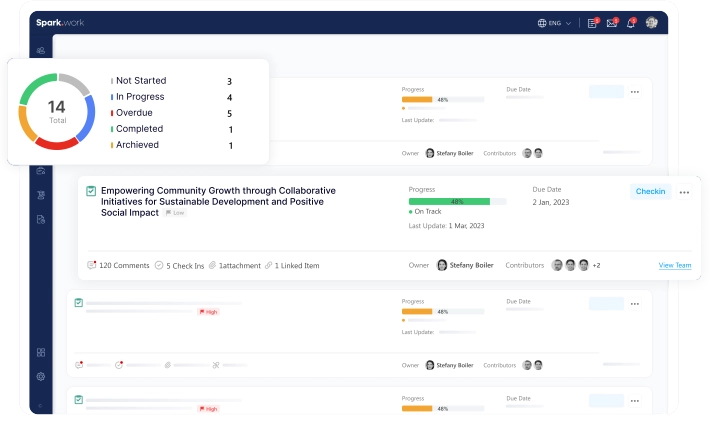
Create initiatives that translate strategy into real work across teams and functions.
Turn ideas, priorities, and strategic direction into concrete, trackable efforts.
Assign owners, contributors, and progress to every initiative so execution is always visible.
Define and manage initiatives independently across teams, departments, and timeframes.
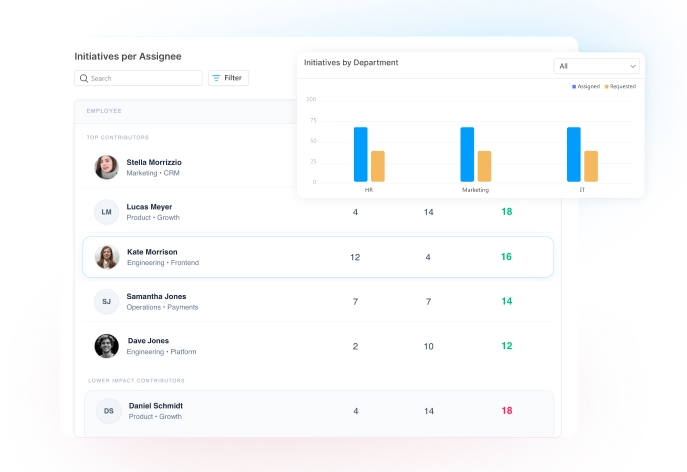
Execution should not be limited to top-down planning. It should be driven by the people closest to the work.
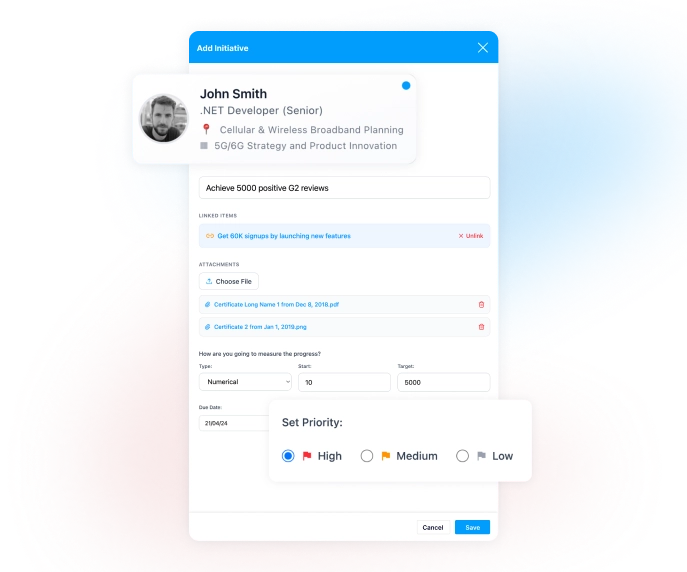
When needed, initiatives can support Key Results by turning measurable outcomes into structured work.
Break Key Results into concrete initiatives that move outcomes forward.
Assign responsibility so execution is always accountable.
Monitor how initiative execution contributes to measurable outcomes.
Coordinate multiple efforts across teams toward the same result.
Assess your current alignment and activate execution across your organization with structured initiatives.
FAQ
An initiative represents a concrete action, project, or effort that drives execution. It allows teams to define work, assign ownership, and track progress across the organization.
OKRs define measurable outcomes the organization aims to achieve. Initiatives define the work required to achieve those outcomes or to drive execution independently.
Yes. Initiatives are primarily independent. They can be used to manage strategic projects, operational improvements, and cross-functional work that are not tied to a specific Key Result.
Initiatives can be created by anyone in the organization, depending on permissions. This enables employees to take ownership of ideas, improvements, and strategic work beyond top-down planning.
Every initiative has a defined owner and can include multiple contributors. The owner is responsible for progress and delivery, while contributors support execution.
Yes. Initiatives are designed to support cross-functional collaboration. Employees can be invited to contribute or request to join initiatives where they can add value.
Initiatives create visibility into ownership, contribution, and impact. Taking initiative, leading efforts, and contributing across teams can directly support performance evaluation, recognition, and promotion decisions.
Initiatives include structured progress tracking, status updates, ownership visibility, comments, and attachments. This ensures that execution is transparent and measurable at all times.
Yes. Multiple initiatives can contribute to the same strategic priority or Key Result. This allows different teams and contributors to work toward a shared outcome through coordinated efforts.
Initiatives are best used for meaningful work such as strategic projects, transformation efforts, cross-functional collaboration, and operational improvements. They provide structure for work that goes beyond day-to-day tasks.
Initiative management is the process of defining, assigning, and tracking the work that drives execution. It ensures that important efforts are clearly owned, visible, and aligned with organizational priorities.
Initiatives connect strategy to real work. By assigning ownership, enabling collaboration, and tracking progress, they ensure that strategic priorities are actively executed, not just planned.