
Avoid financial dominance, neglected capability investment, and conflicting objectives across teams.

STRATEGY
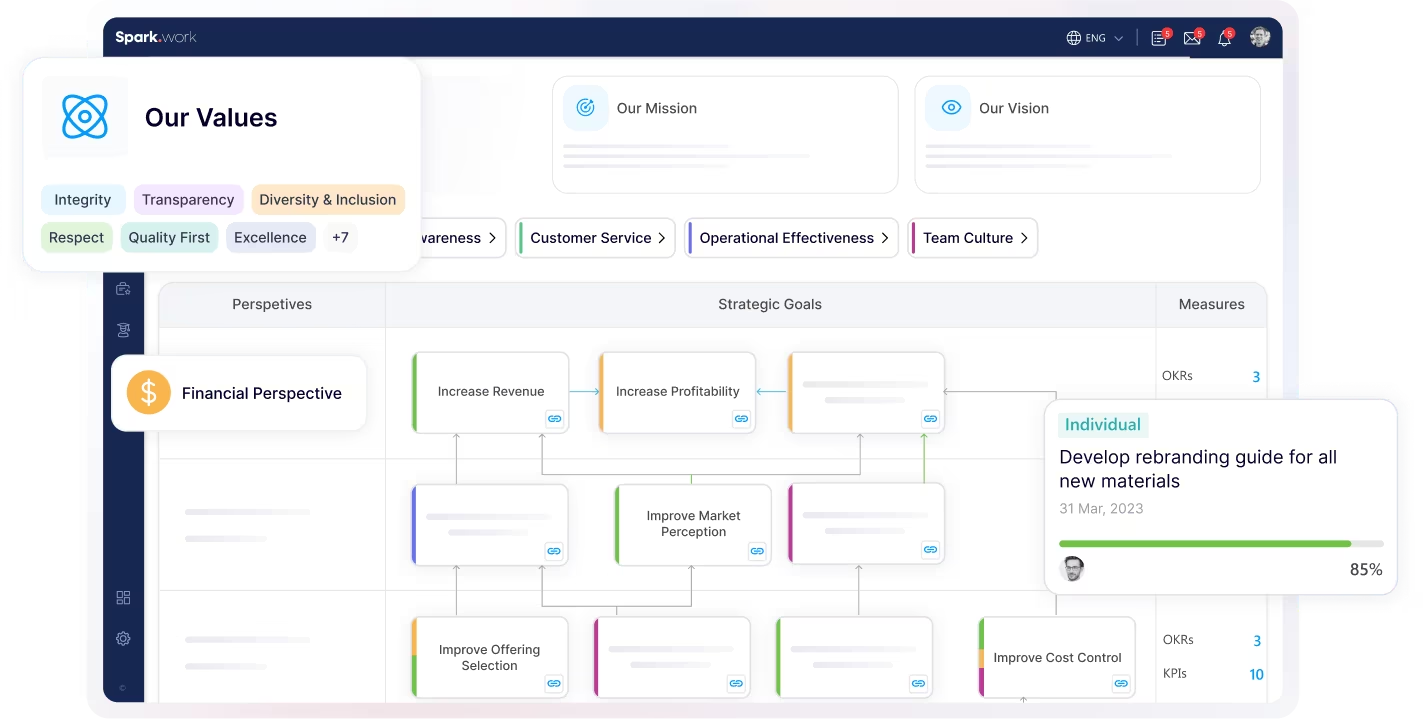
Avoid financial dominance, neglected capability investment, and conflicting objectives across teams.
Organize goals logically so relationships are visible and priorities stay aligned.
Link every goal to KPIs, Initiatives, and OKRs so daily work reflects strategic intent.
STRATEGIC PRIORITIES
Clarify the few priorities that will shape your future and guide execution across the organization.
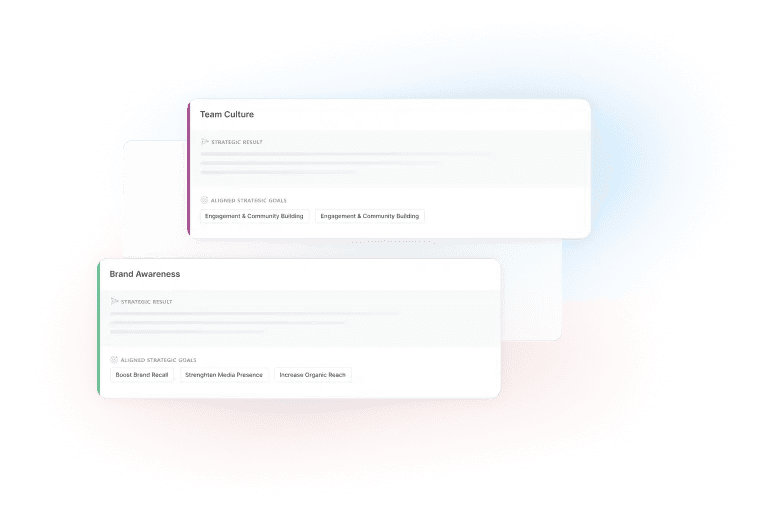
STRUCTURED OBJECTIVES
Translate ambition into structured objectives aligned to clear performance perspectives.

Review how your current goals support long-term pillars and create visible alignment inside your organization.
FAQ
OKRs define targets. They do not define structure. Without pillars and perspectives, objectives often compete, duplicate effort, or overemphasize short-term financial results. Structure ensures goals exist within a coherent strategic model.
Strategic Pillars represent the few long-term priorities that shape your company’s direction. They act as filters for investment, hiring, initiatives, and resource allocation. If something does not support a pillar, it requires justification.
Perspectives organize goals across four balanced dimensions: - Financial - Partners and Clients - Internal Processes - Learning and Growth This prevents imbalance, such as over-focusing on revenue while neglecting capability or operational excellence.
Yes. A single objective may contribute to more than one strategic theme. Connecting goals to multiple pillars makes cross-functional impact visible and prevents siloed execution.
When goals are structured under defined perspectives and linked to pillars, leadership can immediately see: - Where objectives cluster - Where gaps exist - Where investment is missing This reduces overemphasis in one area and neglect in another.
Every goal is directly linked to KPIs, Initiatives, and OKRs. This ensures that daily operational work reflects strategic direction. No KPI exists without context. No initiative exists without relevance.
It eliminates: - Competing priorities - Disconnected departmental goals - Fragmented execution Leadership gains a structured map of how ambition translates into measurable action.
This module does not replace strategy. It structures it. Even well-defined strategies often fail in execution due to lack of organization and connection to daily work.